
ALTERNATIVE OSCARS
And the Sudan Film Group

Gareth Higgins on ALTERNATIVE OSCARS
I say it every year: the best reason for the Academy Awards to exist is to bring attention to films that many folks might otherwise not see.
The second good reason is to encourage filmmakers to reach beyond what they’ve previously discovered.
The third is to acknowledge the variety of work that has appeared onscreen in the previous year.
The fourth is to provide a platform for remembering the lives of movie people who have died since the previous ceremon. This year that includes Rob Reiner, Robert Duvall, Val Kilmer, Diane Keaton, Catherine O’Hara, Isiah Whitlock, Jr., Brigitte Bardot, Michael Madsen, Peter Greene, Terence Stamp, Graham Greene, Diane Ladd, Richard Chamberlain, Homayoun Ershadi, Henry Jaglom, Harris Yulin, Tatsuo Nakadai, Udo Kier, James Foley, Joe Don Baker, Claudia Cardinale, Lalo Schifrin, Leslie Dilley, Robert Benton, AND Lee Tamahori - not all household names, but every one of them co-created an image that will live in my mind forever, and perhaps yours too.
And the fifth reason is to give the entertainment community an opportunity for a party among peers; it’s a weird business, Hollywood, with a lot of people who dream of getting into it discovering once they’ve made it there that they can’t wait to leave. They deserve a moment of mutual affirmation of the meaning of the work, not the business.
Of course the voting record of the Academy doesn’t equate to a history of the greatest films ever made. There’s a treasure chest of movies just waiting to be discovered, their gifts and provocations hidden till we open ourselves to them. So here’s a list of films that weren’t nominated for Best Picture, and a few words to convey what those films mean to me - I hope this will encourage readers to watch some you haven’t seen; and please add your own suggestions in the comments.
For what it’s worth, I intended this list to be much shorter, and to write more about this year’s nominees today - but the joy of skimming through Academy Awards’ history was that there are just so many movies of surpassing wonder that I couldn’t find room for them all. I’ll write about the current nominees next week. For now, the beginnings of a list of extraordinary movies that were not nominated for Best Picture1.
1930s
Make Way for Tomorrow - loving regret
1940s
Fantasia - the cosmos is here
The Shop Around the Corner - love is a funny thing
A Matter of Life and Death - love is a giving thing
Odd Man Out - the cost of tribalism
1950s
Rebel Without a Cause - intergenerational blindness
Vertigo - possession
1960s
8 1/2 - creation
Hiroshima mon Amour - a necessary lament
The Leopard - power must be stewarded by someone
Au Hasard Balthasar - selflessness
Point Blank - revenge is futile
2001: A Space Odyssey - evolution is where we are
The Swimmer - unconsciousness destroys
Once Upon a Time in the West - nation-building is never one good thing after another
Oh! What a Lovely War - self-confrontation
1970s
Little Big Man - broken history
Five Easy Pieces - emptiness
The Private Life of Sherlock Holmes - mournfulness
Women in Love - terrible beauty
Ryan’s Daughter - forgiveness
A New Leaf - growing up
McCabe and Mrs Miller - business
Aguirre the Wrath of God - the colonizer colonizes his own mind
Solaris - reality with an upper case R
Fat City - machismo is death
The Duellists - nonviolent resolution
Close Encounters of the Third Kind - cosmic Narcissus
Days of Heaven - beautiful Depression
Superman - a flying Messiah
Being There - a walking Messiah
Stalker - finding meaning requires losing certainty
All that Jazz - there’s no business like ego-business
The Black Stallion - an interdependent ecosystem thrill ride
1980s
Heaven’s Gate - epic folly (the story, not the movie)
Koyaanisqatsi - life out of balance
Blade Runner - people who need people
Das Boot - humanizing the enemy
Paris, Texas - repair isn’t perfection
Broadway Danny Rose - community
Mass Appeal - truth hurts and heals
Desert Hearts - love hurts and heals
Runaway Train - a hard-won dignity
The Purple Rose of Cairo - life hurts, art heals
Jean de Florette/Manon des Sources - loving your neighbor is good for you too
Matewan - dying for justice is better than killing for money
Raising Arizona - accepting the weirdness of family life
Babette’s Feast - everyone is an artist
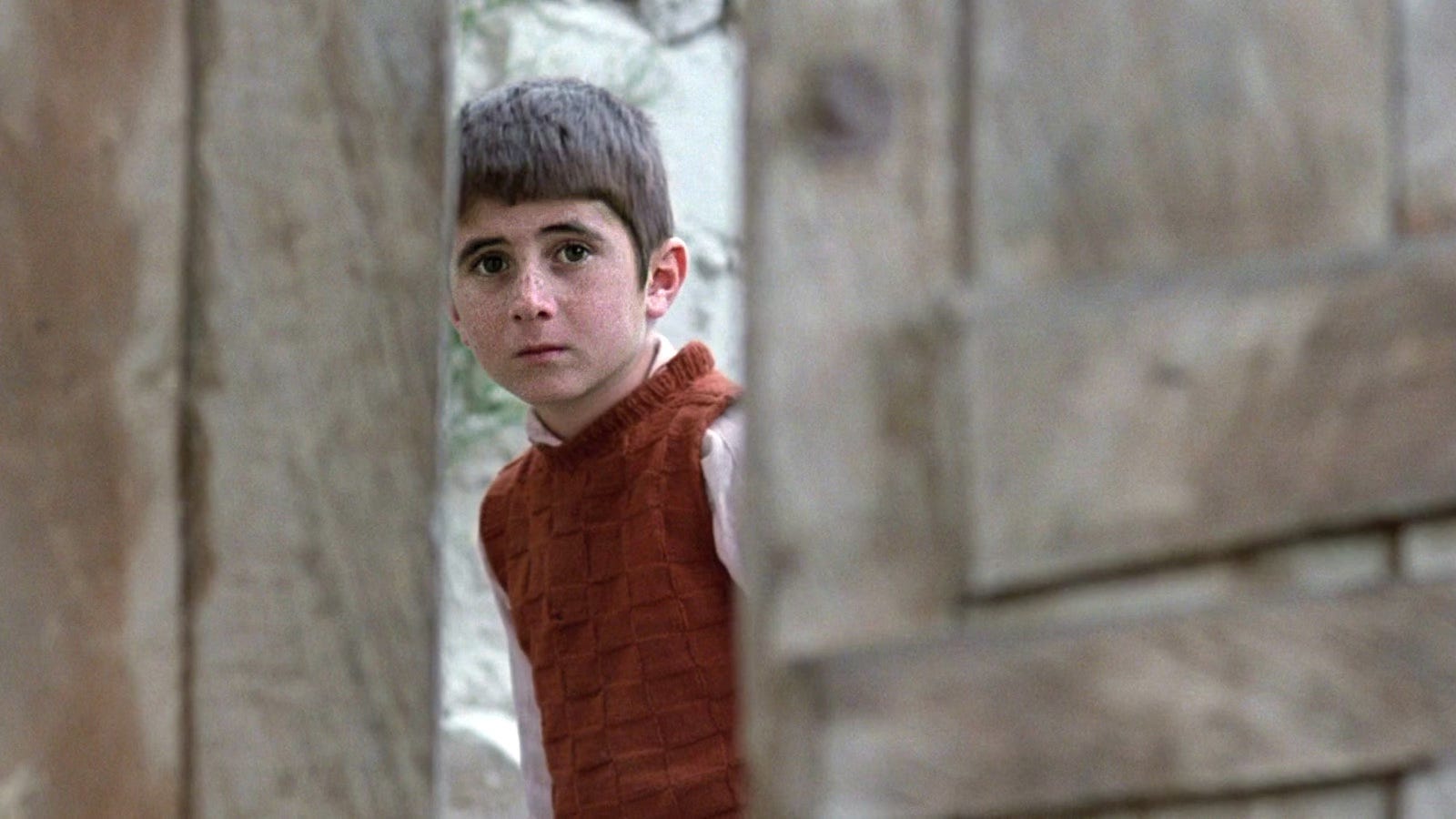
Where is the Friends’ House (above) - heroism sometimes demands childlikeness
The Dead - speak what we feel, not what we ought to say
Jesus of Montreal - gospel of the streets
Do the Right Thing - truth of the streets
The Abyss - the love between partners is a microcosm of cosmic love, and vice versa
1990s
To Sleep With Anger - be careful what you invite in
Malcolm X - the evolution of a great life
Fearless - the evolution of a great death
Three Colors Trilogy - coincidence makes the world go round
The Hudsucker Proxy - joy is the best business
Smoke - if you can’t trust your friends, who can you trust?
Lone Star - Forget the Alamo
The Apostle - both sincere and a con man
Kundun - spirituality as the core of responding to suffering
After Life - how death can help us live better
The Straight Story - a brother’s a brother
Ratcatcher - empathy at the margins
Beau Travail - a call for integrated manhood
2000s
Yi-Yi - the whole of life
In the Mood for Love - touching hearts, not hands
Wonder Boys - life is the art
AI Artificial Intelligence - keening for the human
The Royal Tenenbaums - a late redemption is still redemption
Monsoon Wedding - what we owe each other
Mulholland Dr. - fame is a curse
The Village - grief untended can kill
The New World - who gets to tell the story?
The Fountain - do what you love right now, for tomorrow may be too late
Stranger than Fiction - nothing more powerful than a story
The Assassination of Jesse James by the Coward Robert Ford - nothing more powerful than a story
Revanche - a more complete reconciliation
Wall-E - calling us back to ourselves
2010s
Shutter Island - the cost of moral injury
Le Havre - welcoming the stranger
Margaret - the cost of guilt
Holy Motors - what role are you playing?
Stories We Tell - how other people’s narratives shape our own
Cloud Atlas - history repeats until we evolve it
Before Midnight - along with Before Sunrise and Before Sunset, one of the great cinematic odes to love and loving conflict
Interstellar - what we call love and what we call physics may be interwoven
Love is Strange - at the center, an unshakeable love
Calvary - facing the darkness
Mr Turner - astonishing art and grubby earthiness
Pride - all just causes come from the same human place
The Salt of the Earth - trauma can be transformed through creativity
Inside Out - it’s complicated
Embrace of the Serpent - shamanic mystery, hidden in the forest, and selflessly given
The Assassin - sometimes it is necessary to reject our mentors
Paterson - the miraculous ordinary
Endless Poetry - a life in art
mother! - a biblical invocation against climate destruction
Wonderstruck - the city as a location for spiritual direction
Maudie - sorrow and love
Faces Places - an intergenerational enlightenment
Blindspotting - a race to overcome racism
Diane - a life worthy of the name
2020s
Wonder Woman 1984 - repentance in action
The Painter and the Thief - true crime treated as sacred
Mass - an impossible healing made possible
Amsterdam - integrated activism
Empire of Light - begin afresh, afresh, afresh
Perfect Days - a whole life in one week
A Thousand and One - holy motherhood
Monica - asks the audience if we are scapegoats, or scapegoaters?
All We Imagine as Light - women wombing wholeness
Joker Folie à Deux - a public apology
Kiss of the Spider Woman - sometimes melodrama is the only way to tell a true story
Sorry, Baby - fragility and strength
What are the movies you love, but the Academy didn’t recognize?
Kathleen Norris on THE SUDAN FILM GROUP
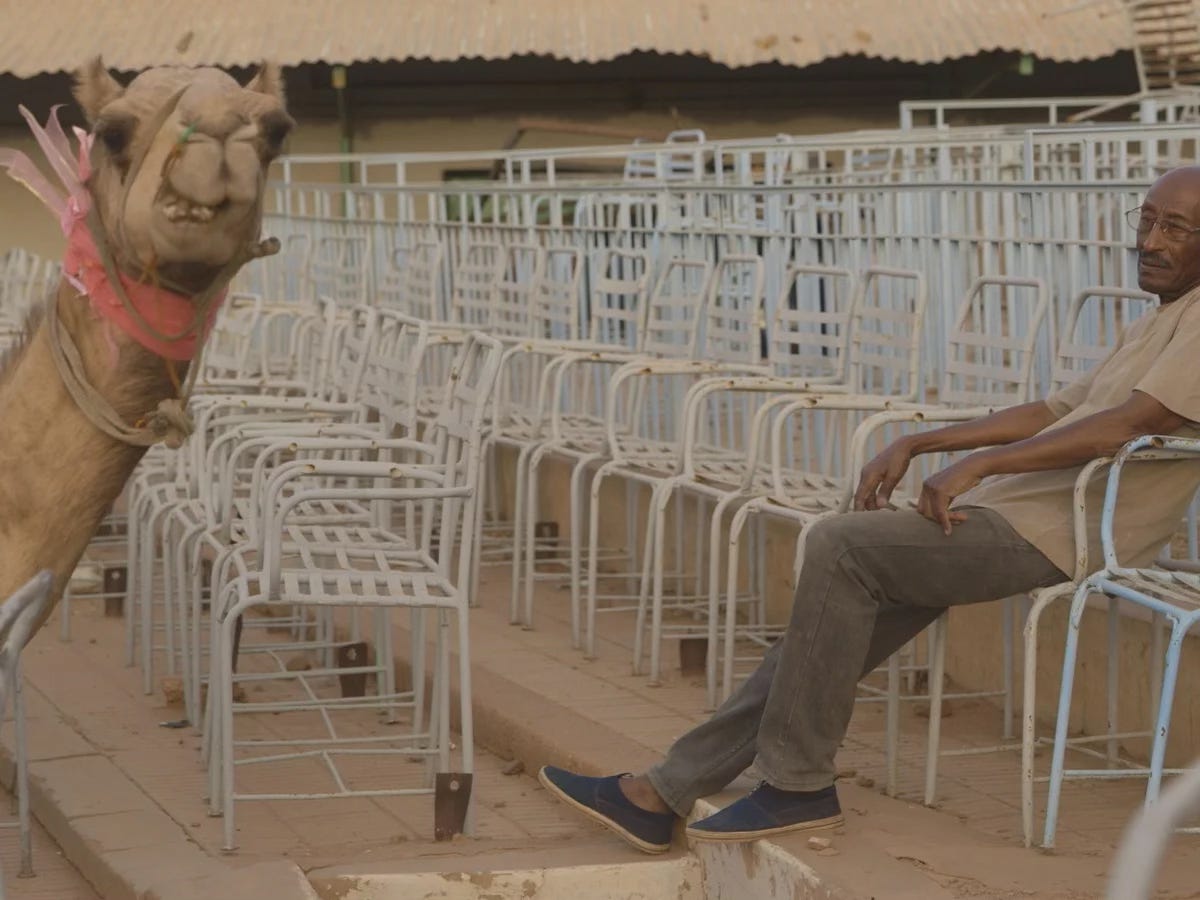
If you need evidence that filmmakers are an intrepid and inspiring lot, consider the Sudanese Film Group, founded in 1989 by Eltayeb Mahdi, Ibrahim Shaddad, and Suliman Mohamed Ibrahim Elnour. They had been part of an informal group of filmmakers working in the 1970’s and early 1980’s, with the goal of making films free from government censorship. While they were familiar with Hollywood films and the French New Wave, they wanted to show the experience of ordinary Sudanese in a troubled country that had been shaped by colonialism, civil war, and political instability. Most of their films are shorts, probably because they lacked the resources to make longer ones. In the feature length Talking About Trees, the men talk about having lived through a disastrous cycle in Sudan: three times they experienced a democracy followed by a dictatorship. The arts flourished, and then were banned, over and over again. The film’s title comes from a comment made by one man, suggesting that even talking about trees could be seen as a political act, as trees remain silent in the presence of horrors. The Sudan Film Group was shut down following a military coup in 1989, and then allowed to regroup in 2005. But after a brutal civil war broke out in 2023, most of the men fled to Egypt, where they now live in exile.
The men had studied film in Germany and Russia, and are not above spoofing a Hollywood classic. An early scene in Talking About Trees is a hilarious take on Norma Desmond’s last scene in Sunset Boulevard. The men are filming by flashlight, as the electric power is out, but they seem used to the inconvenience. We see the men traveling to villages in a rickety van to set up a screen to show Charlie Chaplin films to delighted audiences. But most of the film involves their efforts to restore an old outdoor theater in Khartoum. In order to obtain a license they must deal with three government ministries: Culture, Morality, and National Security. They manage one screening, of Chaplin’s Modern Times, but have to give up when their permit is denied. They’re not surprised: one man says, “let’s get back to our lives,” so they get in the van again, and take films on the road. The easy camaraderie of these long-time friends is enjoyable, and even when they’re discussing how to film the torture they endured in prison, their humor shines through. Their wise and sardonic take on Sudanese politics is refreshing.
The Criterion Channel recently made a number of of the Sudan Film Group’s movies available for screening. The films have very little dialogue, but plenty of sound. A Camel is a 15 minute look at the animal’s dreary life. It’s in black-and-white, and has a nearly unbearable sound track: we hear the loud, hideous groans of a wooden device for grinding sesame seeds into paste. As a camel, blindfolded and chained, walks in circles to work the machine, I couldn’t help feeling sympathy for the animal.: this is what it means to be a beast of burden. Four Times for Children takes us to a school for children with disabilities. It’s touching to see little girls in neat dresses with Peter Pan collars, sporting bows in their hair: this tells us that someone loves and cares for them. In The Station we visit a gas station in the desert: we see piles of rubber sandals for sale, women cooking over steaming pots, and a man playing a home-made instrument resembling a banjo. It’s such an alien world that it’s a shock to see big trucks pass on their way to Khartoum, and a gas tank with the Shell logo. One film, Africa, the Jungle, Drums and Revolution was made at the R.L Karmen film school in Moscow, and juxtaposes scenes of village and urban life in Sudan with interviews of Russians on their view of Africa. One man describes it as a complex but promising place; young Soviet Pioneers gather toys to donate to children in Angola. It’s the faces that stay with you, of young Africans full of joy and hope at a time when freedom from slavery under colonialism is at hand, but serious problems remain. The work of the Sudan Film Group provides a valuable witness to that time.
Talking About Trees (2019, Suhaib Gasmelban, director). A Camel (1981, Ibrahim Shaddad, director). Two directed by Eltayeb Mahdi, The Station (1989) and Four Times for Children (1979). Africa, The Jungle, Drums and Revolution, 1979, Suliman Mohamed Ibrahim Elnour, director). Streaming on Criterion.
I’m focusing mostly on English language films here, but of course dreaming the world invites us to broaden the horizons of our viewing.