
TRAIN DREAMS

Gareth Higgins on TRAIN DREAMS
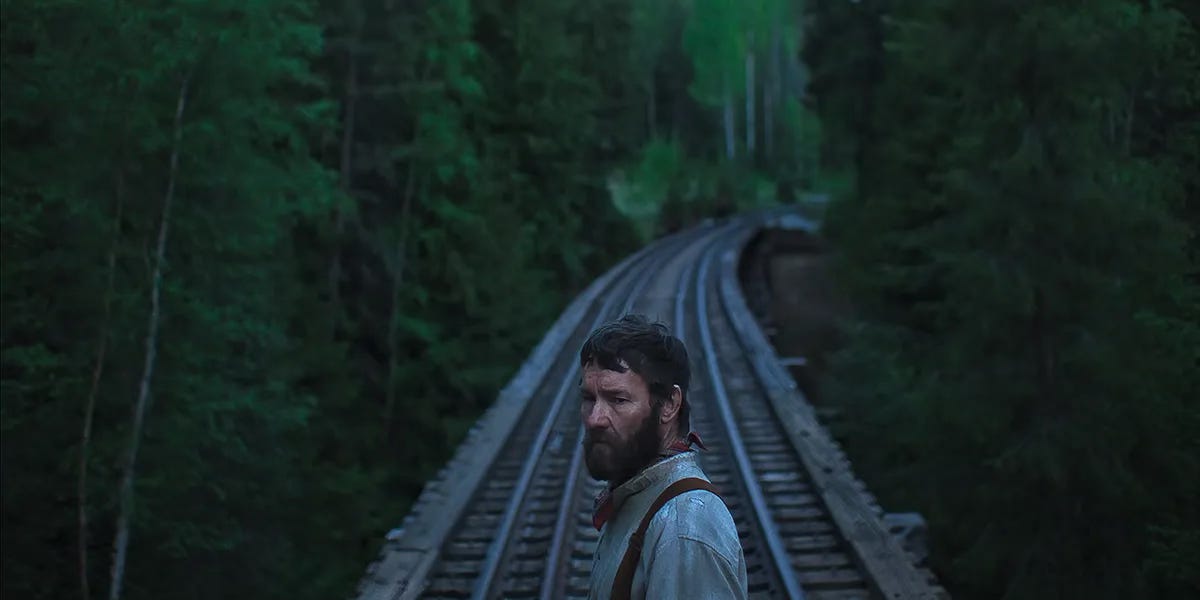
Train Dreams is the kind of film that wins plaudits just because it exists, so I wanted to see it again to evaluate my initial sense that it was my favorite film of last year. Sometimes the emotional elevation of my first viewing may blind us to a lack of depth, but a second viewing of this film was richer still. An interior epic directed with a kind of epic grace by Clint Bentley, and with cinematography that makes the natural world seem supernatural (which, of course, it is), Train Dreams is a marvel of humane cinema.
After a TV viewing a couple of months ago, this week I managed to see it in the Egyptian Theatre in Hollywood. The home of historic movie premieres, now owned by Netflix and run with supreme elegance as if movie theaters are going out of style. The Egyptian is a palace, and movies like Train Dreams are worthy of it. I’ve often mentioned another Egypt reference in the realm of cinematic authenticity; three decades ago, marking the centenary of cinema the Scottish art professor Mike Catto said that watching movies on TV compares with seeing them in a (decent) theatre the same way that going to the Egypt room at the British Museum compares with visiting the Pyramids. It’s a universal good that due to streaming services more cinema is available to more people than ever; that subtitled cinema is less intimidating to wide audiences (two non-English language films are this year nominated for Best Picture); that people may stumble across something of surpassing wonder while flicking through a screen menu. That good is tempered, and of course may ultimately be undone entirely, by the way streaming services are undermining the theatrical experience (although it has to be said that some multiplex chains could try harder to make the experience more enjoyable than staying home). At any rate, Netflix has made the Egyptian in Hollywood and its cousin the Aero in Santa Monica two of the loveliest theaters in the world, with some of the most kaleidoscopically diverse programming. I’ve seen Ryan’s Daughter at the Aero and realized that it’s not the soap opera I thought it was from small screen diminishment, but simply an opera, and a magnificent one too. I’ve seen Lone Star there on a crackly 35 mm print and been reminded why I think it’s best US American film of the ‘90s, one whose very editing illustrates how the past and present are always dancing with each other. And now I’ve seen Train Dreams on one of the biggest screens in the country, and been overwhelmed by a work of outstanding beauty and pathos.
Like Jeremiah Johnson directed by Terrence Malick, Train Dreams is based on the novella by Dennis Johnson about the eight decade lifespan of Robert Granier, a logger in the Pacific Northwest born at the tail end of the nineteenth century. Granier, inhabited by Joel Edgerton in the latest evidence that he’s one of the best actors of his generation, has life happen to him: losing his parents so young that he never knows his actual age, offering comfort to a dying man (cameo perfection from Clifton Collins, Jr.), learning to work with his hands, powerlessly confronting the horror of lethal racist violence, and eventually falling in love (with Gladys, played beautifully by Felicity Jones as a strong though not forceful match) only to be overcome by a tragedy so awful that it can only induce wordless sympathy, patience, and the supportive service of a community. In his case that support takes the form of a man who gives him bread, helps him light a fire, and with a gesture and a phrase or two shows him that he will not sentimentalize nor downplay this seemingly infinite pain.
