
The Odyssey

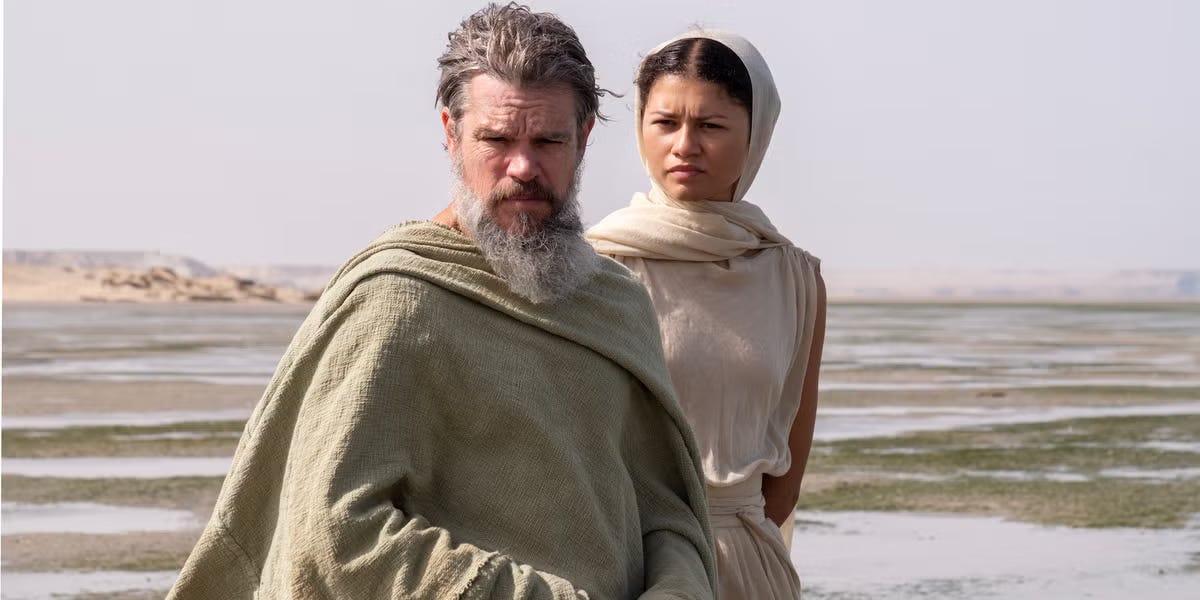
Gareth Higgins on THE ODYSSEY
The first question many people are asking about The Odyssey, Christopher Nolan’s truly epic adaptation of Homer, is how faithful it is to the original. My answer begins with a gentle push back on the premise of the question: how much does it actually matter if something is faithful to a prior text? To call upon another ancient teacher, Hippocrates shifted the common understanding of disease as having physiological rather than otherworldly roots, and we gave his name to an oath that should guide anyone in a position of authority (though it was actually others who coined the idea of do no intentional harm); yet he also believed that illness could be attributed to four humors which don’t actually exist. Relying on what Hippocrates thought is not going to help clear a common cold, not to mention more serious conditions; but extrapolating from the core ethical notion associated with him could serve us well, even if he didn’t write it. There’s value, of course, in getting as close as possible to historical information about the story of Hippocrates, but biographical data doesn’t exhaust meaning.
So it is with The Odyssey, whose “accuracy” I’m not qualified to assess. But I do know something about life, and about movies, and about storytelling, and this movie, about this particular life, deserves sustained attention for what it says about storytelling. I’ve seen it three times in four days, and I’ll see it again, not because I “love” it, but because of what it loves. That beautiful idea, first shared with me by the critic Jeffrey Overstreet, is a good guide to thinking about art generally. This is true even if it’s not clear what the work loves; and in this case The Odyssey more than most films of its scale is eliciting hugely contradictory responses.
